Upgrading & Fixing Networks for Dummies

CHEAP,Discount,Buy,Sale,Bestsellers,Good,For,REVIEW, Upgrading & Fixing Networks for Dummies,Wholesale,Promotions,Shopping,Shipping,Upgrading & Fixing Networks for Dummies,BestSelling,Off,Savings,Gifts,Cool,Hot,Top,Sellers,Overview,Specifications,Feature,on sale,Upgrading & Fixing Networks for Dummies Upgrading & Fixing Networks for Dummies

Upgrading & Fixing Networks for Dummies Overview
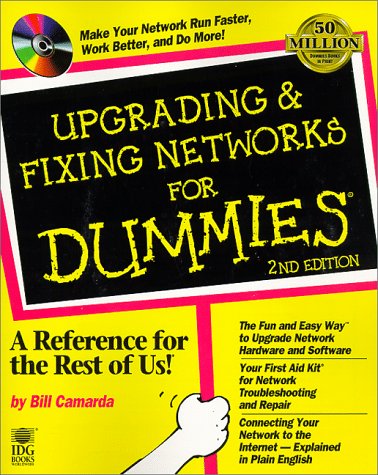
This package helps readers sort through modern flashy technologies so they can figure out which ones are worth the trouble. It also gives advice on keeping network performance at the lowest possible cost, and includes a CD-ROM containing QuickMail Pro Server, an e-mail server, and Artisoft iShare.
Upgrading & Fixing Networks for Dummies Specifications
Upgrading & Fixing Networks for Dummies, Second Edition, doesn't spend time explaining how to build a new local area network (LAN) or how to install a network operating system. Rather, author Bill Camarda assumes you have a LAN in place and that you would like to optimize its performance.
Camarda focuses on the two prime contenders in the LAN marketplace--Microsoft Windows NT 4 and Novell NetWare 5. He discusses the installation procedures for both systems on new servers, including the steps necessary for upgrading your software. He also offers some technical tips for efficiently using older, existing hardware resources. He explains how to establish disk quotas and other resource conservation measures and addresses the security features of the two products.
Some sections of this book seem padded. The information on intranets is welcome, but this isn't the kind of book that needs a page-long stepped procedure for converting image files into JPEG format for browser compatibility. The sections on extranets and groupware are very elementary--they're essentially executive summaries of the technologies. In place of these components, Upgrading & Fixing Networks for Dummies should contain information on sharing Internet access across a LAN with a router or proxy server. That is the kind of thing the users of an established network want to add most. --David Wall
